
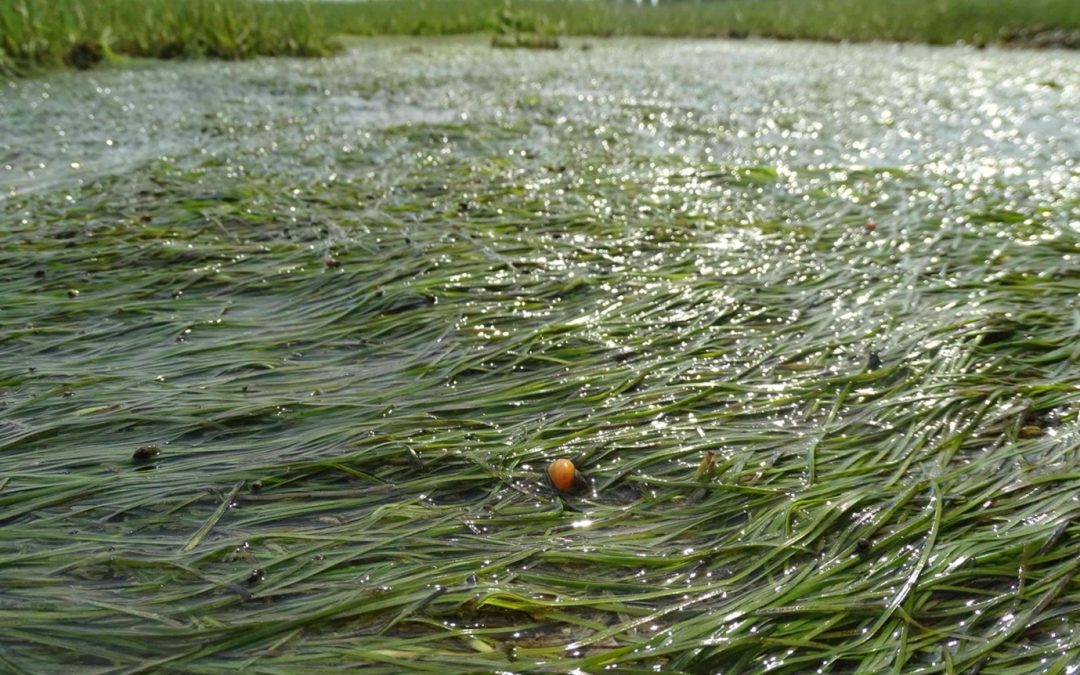
Featured image: Dwarf eelgrass (Zostera noltei) at St Lawrence in the Blackwater Estuary, Essex by Jules Agate.
The LIFE Recreation ReMEDIES Project has spent the past five years trialling ways to reduce and reverse recreational impacts on seagrass meadows.
Working across five Special Areas of Conservation (SACs) on the English coast where seagrass habitats are assessed as being in ‘unfavourable condition’, including Essex Estuaries, the project has assessed recreational impacts and trialled solutions to help recovery. We’ve used protective voluntary no anchor zones, installed advanced mooring systems to reduce boat damage and planted seagrass on the seafloor.
In Essex the team have been busy spreading the word about seagrass. Teaming up with the Essex Wildlife Trust (EWT) who run the Essex Seagrass project, together they have attended events, led sessions to show people how to recognise and record seagrass and opened lines of communication with groups that use the coast for recreation.
Local volunteers surveyed 14 Essex sites where seagrass is, was, or could be, to assess coastal recreational levels. Click here to view the results map.
Essex seagrass is mainly an inter-tidal type called dwarf eelgrass (Zostera noltei). It grows usually near the shore and is often exposed as tides fall. It can be damaged by trampling of people or dogs, through dragging water-sports gear, anchoring or mooring and bait digging.
There are simple ways that everyone can help seagrass recover from the estimated at least 40% UK-wide losses to extent that we’ve seen since the 1930s:
• Know where seagrass is; check our map!
• Avoid trampling and physical damage when enjoying the coast
• Raise awareness about seagrass
As the LIFE Recreation ReMEDIES project ends, Project Seagrass and the Essex Wildlife Trust will continue collaborating on an ambitious scheme to actively boost seagrass by transplantation, beginning in the Blackwater Estuary.
The project team hopes that community groups and projects will use the map of seagrass and recreational pressures to help plan their own initiatives to help seagrass and wildlife to recover at our beautiful Essex coast.
Please click the links to learn more about Remedies work – Save our Seabed, Essex Seagrass Project – Saving seagrass | Essex Wildlife Trust (essexwt.org.uk) and the Essex Project Seagrass.
The LIFE Recreation ReMEDIES project is funded by the EU LIFE programme and is led by Natural England in partnership with The Royal Yachting Association, Marine Conservation Society, Ocean Conservation Trust and Plymouth City Council/Tamar Estuaries Consultative Forum. Co-funded by the European Union. Views and opinions expressed are however those of the author(s) only and do not necessarily reflect those of the European Union or CINEA. Neither the European Union nor the granting authority can be held responsible for them.
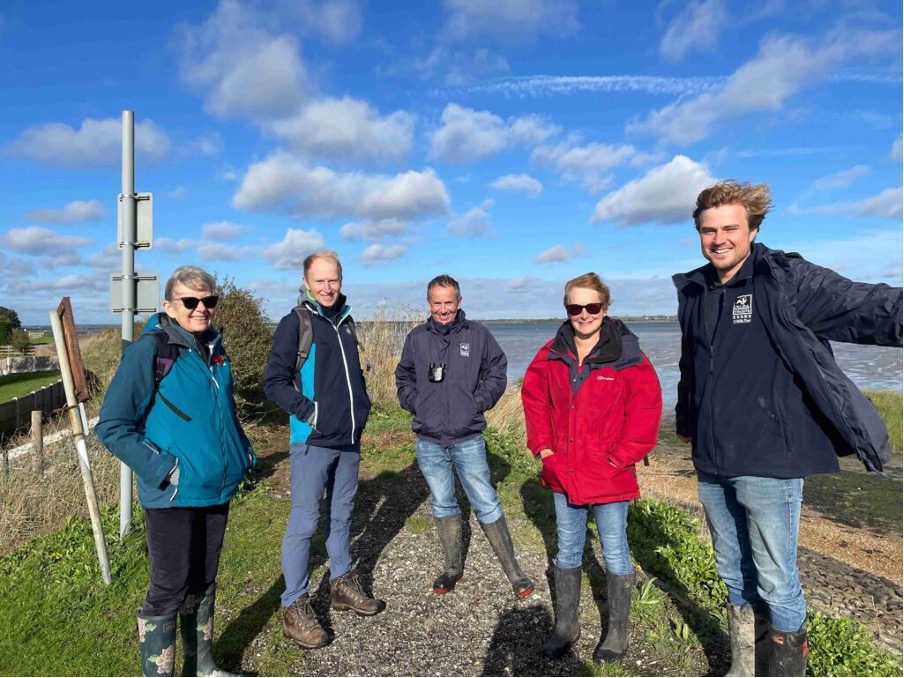
Essex Wildlife Trust volunteers by Jules Agate